
February 18 - Psalm 18-20
The heavens declare the glory of God; And the firmament shows His handiwork. (Psalm 19:1)
Psalm 19:1 stands as one of Scripture’s most profound apologetic statements. In a single verse, David asserts that creation itself is not silent but communicative. The heavens “declare,” and the firmament “shows.” This language implies active, continual revelation. Long before the rise of formal philosophy, modern science, or written Scripture, God chose to make His power and glory visible through what He created. Psalm 19:1 thus provides a foundational argument for God’s existence and power grounded in general revelation.
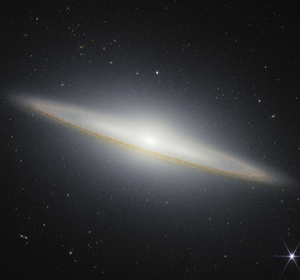
David begins with the heavens, the vast expanse above the earth, stretching far beyond human reach or control. Even ancient observers, without telescopes or scientific instruments, recognized that the heavens were orderly, majestic, and beyond human design. David interprets this universal human experience theologically: the heavens declare the glory of God. They are not mute; they speak. Their message transcends language, culture, and time.
The word “declare” implies proclamation. Creation does not whisper a vague suggestion of a higher power; it announces God’s glory boldly. Glory in Scripture refers to the visible manifestation of God’s greatness. It refers to God’s weightiness, majesty, and power. The sheer scale of the universe alone testifies to a Creator whose power exceeds human comprehension. Billions of galaxies, each containing billions of stars, operate with precision and consistency. Such immensity cannot reasonably be attributed to blind chance or unguided processes. Power of this magnitude demands an adequate cause.
David then parallels the first statement with a second: “the firmament shows His handiwork.” The firmament refers to the expanse or sky. It is the visible realm where sun, moon, clouds, and stars reside. The phrase “His handiwork” points to intentional craftsmanship. This is not the language of accident but of design. Just as a painting reveals a painter and a building reveals a builder, the universe reveals a Maker. The order, balance, and intelligibility of creation testify that it is the product of a rational, powerful mind.
From an apologetic standpoint, Psalm 19:1 confronts two common objections: atheism and agnosticism. Atheism claims there is no God; agnosticism claims there is insufficient evidence to know whether God exists. David counters both by asserting that evidence is not only present, but also abundant and constant. The heavens declare God’s glory every moment. The problem is not a lack of revelation but a refusal to acknowledge it. Creation provides sufficient testimony to God’s power, leaving humanity without excuse.
This truth is echoed elsewhere in Scripture, particularly in Romans 1:18–20, where Paul states that God’s invisible attributes are clearly seen, being understood through what has been made. God has embedded evidence of His power into the fabric of reality itself. The universe is not merely functional; it is revelatory.
Importantly, Psalm 19:1 emphasizes God’s power, not merely His existence. Many people concede that “something” might be behind the universe, but Scripture goes further. The heavens do not declare a weak, distant, or limited deity. They declare glory. Power is evident in the laws that govern the cosmos, the energy that fuels the stars, and the precision that keeps planets in stable orbits. A slight alteration in these laws would render life impossible. Such fine-tuning points not only to intelligence but to immense sustaining power.
Furthermore, this revelation is universal. Unlike Scripture, which must be translated and taught, creation speaks to all people everywhere. A shepherd in ancient Israel, a philosopher in Greece, a scientist in the modern laboratory. All humanity looks up at the same sky. This universality underscores God’s desire to be known. He has not hidden Himself from humanity; He has surrounded humanity with evidence of His power.
Yet Psalm 19 does not end with the heavens. Later verses move from general revelation to special revelation. It points to the law of the Lord. This progression is important to see and understand. Creation reveals that God exists and is powerful, but it does not reveal His saving grace. The heavens can declare God’s glory, but they cannot declare the gospel. Nevertheless, without acknowledging the truth of verse 1, many never move on to the truth of redemption. Denying God’s power in creation often leads to rejecting His authority in Scripture.
In a modern context, Psalm 19:1 remains profoundly relevant. Advances in science have not diminished God’s glory; they have magnified it. The more man looks into the universe, the more complex, vast, and finely ordered it appears. Rather than replacing God, scientific discovery continually uncovers further evidence of a powerful Designer. David’s ancient words resonate even more strongly today: the heavens still declare.
Ultimately, Psalm 19:1 calls every observer to a response. Revelation demands accountability. To see God’s power in creation is to be confronted with His reality. One may suppress that truth, ignore it, or explain it away, but one cannot honestly deny that creation points beyond itself. The universe bears God’s signature.
In this single verse, David establishes a timeless apologetic: God has revealed His power openly, continuously, and universally. The heavens are His witnesses. The firmament is His display. And every human being who looks upon creation is invited to recognize the glory and power of the Creator who made it all.