
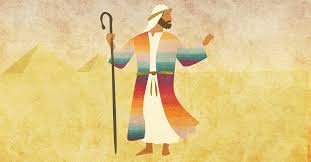
March 16 - Genesis 40-43
*So the advice was good in the eyes of Pharaoh and in the eyes of all his servants. 38 And Pharaoh said to his servants, *“Can we find such a one as this, a man in whom is the Spirit of God?”**
39 Then Pharaoh said to Joseph, “Inasmuch as God has shown you all this, there is no one as discerning and wise as you. 40 You shall be over my house, and all my people shall be ruled according to your word; only in regard to the throne will I be greater than you.” 41 And Pharaoh said to Joseph, “See, I have set you over all the land of Egypt.”
42 Then Pharaoh took his signet ring off his hand and put it on Joseph’s hand; and he clothed him in garments of fine linen and put a gold chain around his neck. 43 And he had him ride in the second chariot which he had; and they cried out before him, “Bow the knee!” So he set him over all the land of Egypt. 44 Pharaoh also said to Joseph, “I am Pharaoh, and without your consent no man may lift his hand or foot in all the land of Egypt.” 45 And Pharaoh called Joseph’s name Zaphnath-Paaneah. And he gave him as a wife Asenath, the daughter of Poti-Pherah priest of On. So Joseph went out over all the land of Egypt. (Genesis 41:37-45)
These verses record a dramatic turning point in the life of Joseph. Joseph, who had endured betrayal, slavery, false accusation, and imprisonment, is suddenly elevated to the second highest position in Egypt. These verses demonstrate how God uses wisdom, humility, and faithfulness to accomplish His purposes and provide salvation for many people.
The passage begins with Pharaoh and his servants approving Joseph’s interpretation of Pharaoh’s dream and plan for dealing with the coming famine. Joseph had just explained that seven years of abundance would be followed by seven years of severe famine. Not only did he interpret the dream accurately, but he also provided a practical solution: appoint a wise administrator to store grain during the years of plenty. Pharaoh immediately recognized the wisdom of Joseph’s counsel.
Pharaoh then asked an important question in verse 38: “Can we find such a one as this, a man in whom is the Spirit of God?” Even though Pharaoh was a pagan ruler, he recognized something unique about Joseph. The wisdom Joseph displayed could not be explained merely by human intelligence. It was the result of divine revelation and the presence of God working in Joseph’s life. This acknowledgment highlights a key theme in Joseph’s story: God’s presence with His servant. Earlier passages repeatedly state that “the Lord was with Joseph” (Genesis 39:2, 21). Now even Pharaoh sees evidence of God’s hand upon him.
Pharaoh then declares in verse 39, “Inasmuch as God has shown you all this, there is no one as discerning and wise as you.” Pharaoh acknowledges that Joseph’s knowledge comes from God. As a result, he appoints Joseph to oversee Egypt’s entire administration. Joseph is given authority over Pharaoh’s house, and all the people are to obey his commands. Pharaoh makes it clear that only the throne itself will place him above Joseph. This moment represents a remarkable reversal of Joseph’s circumstances. The one who was once a slave and prisoner is now the most powerful man in Egypt under Pharaoh.
Verses 41–43 describe the formal elevation of Joseph to this position. Pharaoh places his signet ring on Joseph’s hand, symbolizing delegated authority to act on behalf of the king. He clothes Joseph in garments of fine linen and places a gold chain around his neck. This was a sign of honor and royal status. Joseph is also given the privilege of riding in Pharaoh’s second chariot while people cry out before him, “Bow the knee!” These acts publicly affirm Joseph’s authority and demonstrate that his leadership is officially recognized throughout Egypt.
This scene emphasizes the theme of divine providence. Years earlier, Joseph had received dreams indicating that he would one day rule and that others would bow before him (Genesis 37:5–11). At the time, those dreams seemed impossible and even provoked jealousy from his brothers. Yet God faithfully brought those promises to fulfillment through a series of painful but purposeful events. Joseph’s suffering was not meaningless; it was part of God’s preparation for a greater mission.
Pharaoh further confirms Joseph’s authority in verse 44 by declaring, “I am Pharaoh, and without your consent no man may lift his hand or foot in all the land of Egypt.” This statement establishes Joseph as the chief administrator over the entire nation. No decision or action of significance can occur without his approval.
Finally, verse 45 records additional steps that integrate Joseph fully into Egyptian society. Pharaoh gives him the Egyptian name Zaphnath-Paaneah and gives him Asenath, the daughter of Potipherah priest of On, as his wife. These actions signify Joseph’s acceptance into the highest levels of Egyptian leadership and culture. From that moment forward, Joseph goes out over all the land of Egypt to begin carrying out the plan that God had revealed.
Theologically, this passage illustrates several important truths. First, it demonstrates God’s sovereignty over history. God orchestrates events to place Joseph exactly where he needed to be to preserve many lives. Second, it highlights the value of godly wisdom. Joseph consistently gives glory to God rather than claiming credit for himself, and this humility allows God to elevate him at the proper time. Third, the passage foreshadows God’s pattern of exalting the humble. Joseph’s descent into suffering precedes his rise to authority, a theme that later finds ultimate fulfillment in Jesus Christ, who was humiliated before being exalted.
Genesis 41:37–45 ultimately reminds readers that God is able to transform hardship into blessing and position His servants to accomplish His purposes. Joseph’s sudden promotion was not merely a political event; it was part of God’s plan to preserve nations during the coming famine and to fulfill His covenant promises to the family of Israel.