
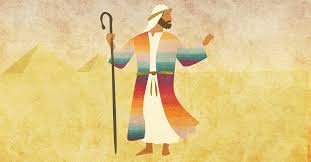
March 30 - Genesis 48-50
And Joseph said to his brethren, “I am dying; but God will surely visit you, and bring you out of this land to the land of which He swore to Abraham, to Isaac, and to Jacob.” 25 Then Joseph took an oath from the children of Israel, saying, “God will surely visit you, and you shall carry up my bones from here.” 26 So Joseph died, being one hundred and ten years old; and they embalmed him, and he was put in a coffin in Egypt. (Genesis 50:24-26)
The book of Genesis concludes with the death of Joseph and the promise of the Abrahamic Covenant. In the final verses, Joseph, nearing death, speaks words that echo far beyond his own generation: “God will surely visit you.” This statement is not merely a farewell; it is also declaration of unwavering faith in God’s promises.
Joseph had experienced both deep suffering and extraordinary blessing. Sold into slavery by his brothers, falsely accused, and imprisoned, he later rose to become a ruler in Egypt. Yet, despite his success and status, Joseph never lost sight of his identity as part of God’s covenant people. His confidence was not rooted in Egypt’s prosperity but in God’s promises made to Abraham, Isaac, and Jacob. When Joseph says, “God will surely visit you,” he expresses certainty that God will intervene in history to fulfill His covenant.
The phrase “God will visit you” carries profound theological significance. It does not imply a casual or distant observation but an active, purposeful intervention. Joseph is pointing forward to a future act of deliverance that would later unfold in the Exodus. Though Joseph would not live to see it, he believed that God would bring His people out of Egypt and into the land He had promised. This reflects a faith that extends beyond present circumstances and even beyond one’s own lifetime.
Joseph’s request concerning his bones further demonstrates this faith. He instructs the Israelites to carry his remains with them when God delivers them. This act symbolizes his confidence that God’s promise of the Promised Land would be fulfilled. It is a tangible expression of hope, showing that Joseph identified not with Egypt, where he was honored, but with the future inheritance of God’s people. His burial instructions were a testimony: Egypt was not his home.
This passage highlights an essential aspect of faith: trusting in God’s covenant even when fulfillment is delayed. Joseph did not see the Exodus, yet he lived and died believing in it. His faith was not dependent on immediate evidence but on the character of God. This kind of faith challenges believers today to trust God’s promises even when circumstances seem unchanged or uncertain.